Redwood National and State Parks, California, United States
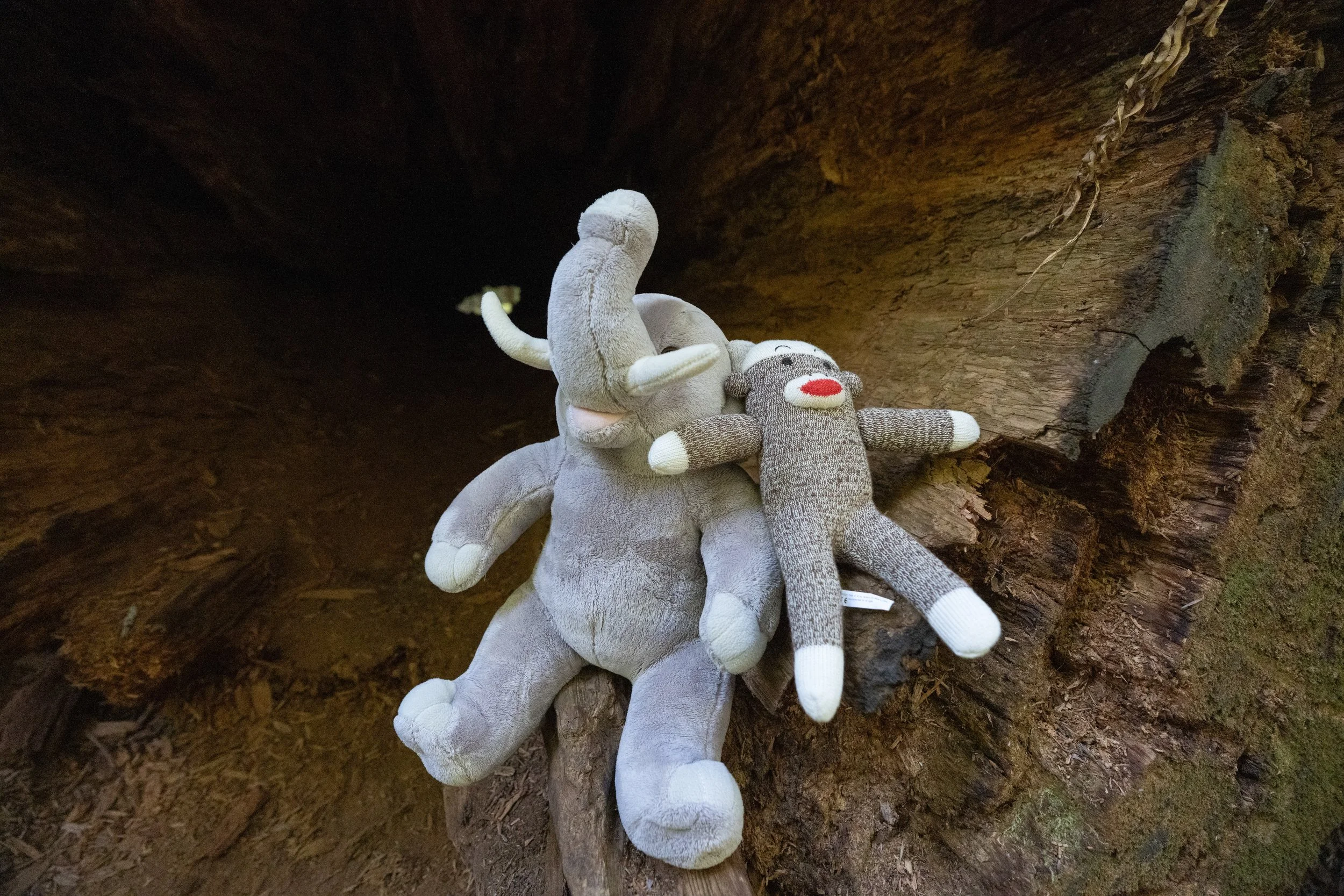
Smo joined by special guest Beau (short for Beauregard) on our first chapter of travel, deep in the natural world
Before Lauren and I departed the United States, we felt that the best way to say goodbye to our country was to visit some of the best and most unique features it has to offer. For us (and particularly for Lauren), that meant touring some of our great National Parks… and even – to my dismay – camping in a few.
In my defense, I’m a bit spoiled by modern luxuries such as mattresses and modern plumbing. But that doesn’t portend any lack of fondness for the parks all across our nation, and particularly in California. I’m hardly alone in this; in particular, I recall when Ken Burns documented the history of the National Park Service, he elected to name the series The National Parks: America's Best Idea. If you’re familiar with his extensive work, his use of such tall language for the NPS of all things ought to leave quite an impression!
And yet, as I’ve had the opportunity to visit our parks and learn more about how they came about, I can’t help but feel a bit romantic about how fortunate we are to have any National Park System at all. I’ll muse a bit on some of that history in the next few writings, as I share updates from other parks we visit. But living in a day and age where successive Congresses seem to compete on how unproductive they can be, the purpose stated in the Organic Act of 1916 (which created the National Park Service) is refreshing:
…to conserve the scenery and the natural and historic objects and the wild life therein and to provide for the enjoyment of the same in such manner and by such means as will leave them unimpaired for the enjoyment of future generations.
While the entire act is rather dry, it took just this one sentence for Congress to enumerate the need to protect our greatest natural features, both in respect to the natural world, and as a gift to our future generations. As far as I’m concerned, it might be the best sentiment Congress has ever committed to law, and best example of our better (and uniquely American) virtues. We have the wherewithal to do the good things sometimes, despite their difficulty.
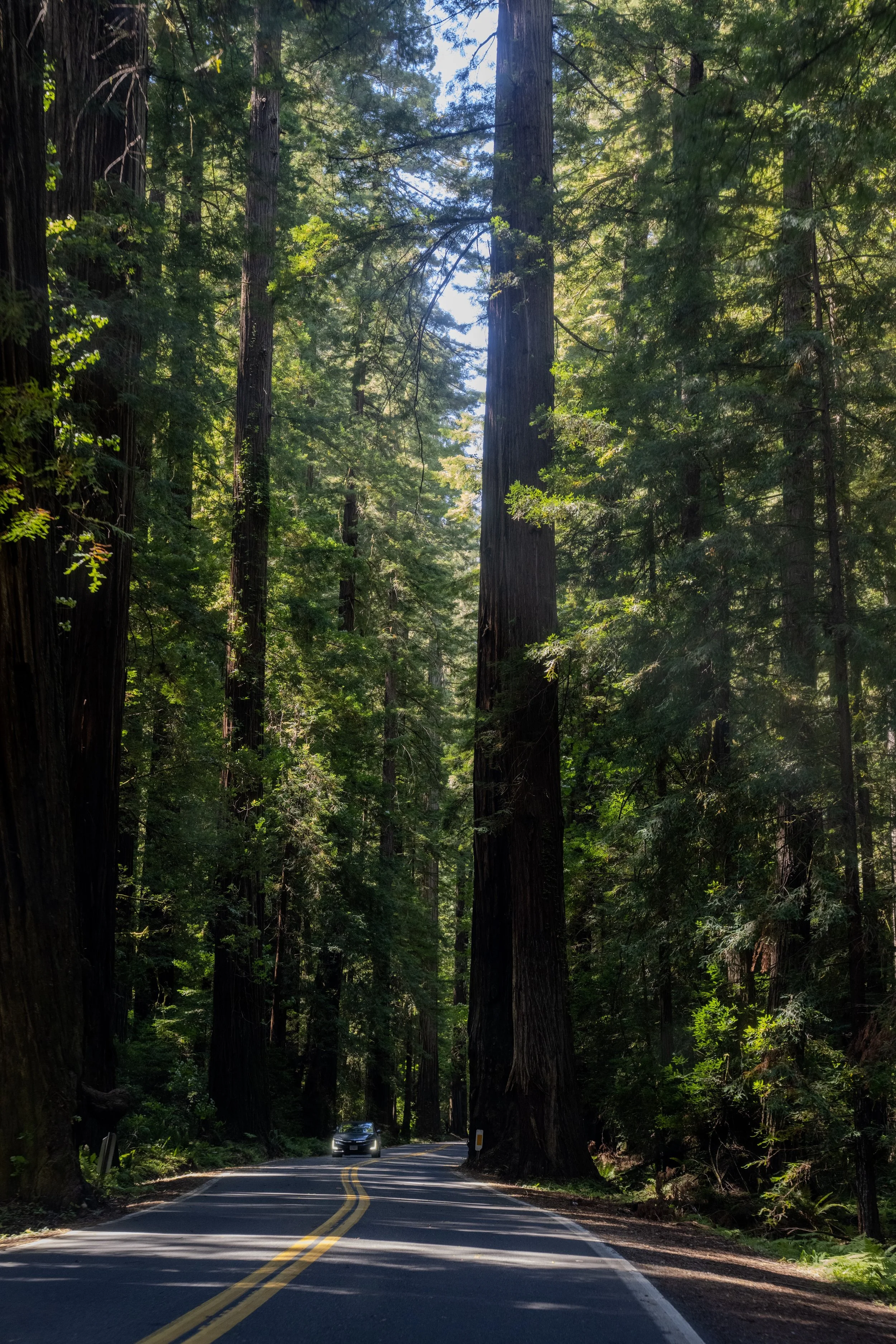
Among the redwoods, cars feel diminutive and docile, like bounding rabbits darting between the towering trees
Entering the mystical land of the redwoods
Although this wasn’t the first time either of us enjoyed the Redwood parks, it’s hard to enumerate how shocking it can be to enter their domain, even with the experience of prior encounters. Forests have a tendency towards boring homogeny on long drives, but as you approach and enter Redwood National Park, this expectation is shattered in short order. In mere moments, typical forestry gives way to increasingly massive trees, which find themselves creeping closer and closer to the aprons of the road, swallowing it whole. In response, the road itself is forced to wind around the substantial trunks, dodging the trees as it dutifully takes you deeper into their enclave. Particularly if you ever have the chance to drive through this park yourself, the scale of the trees is so disorienting that you often feel viscerally as if you’ve shrunk in size. It’s the only way the brain can reconcile what it sees.
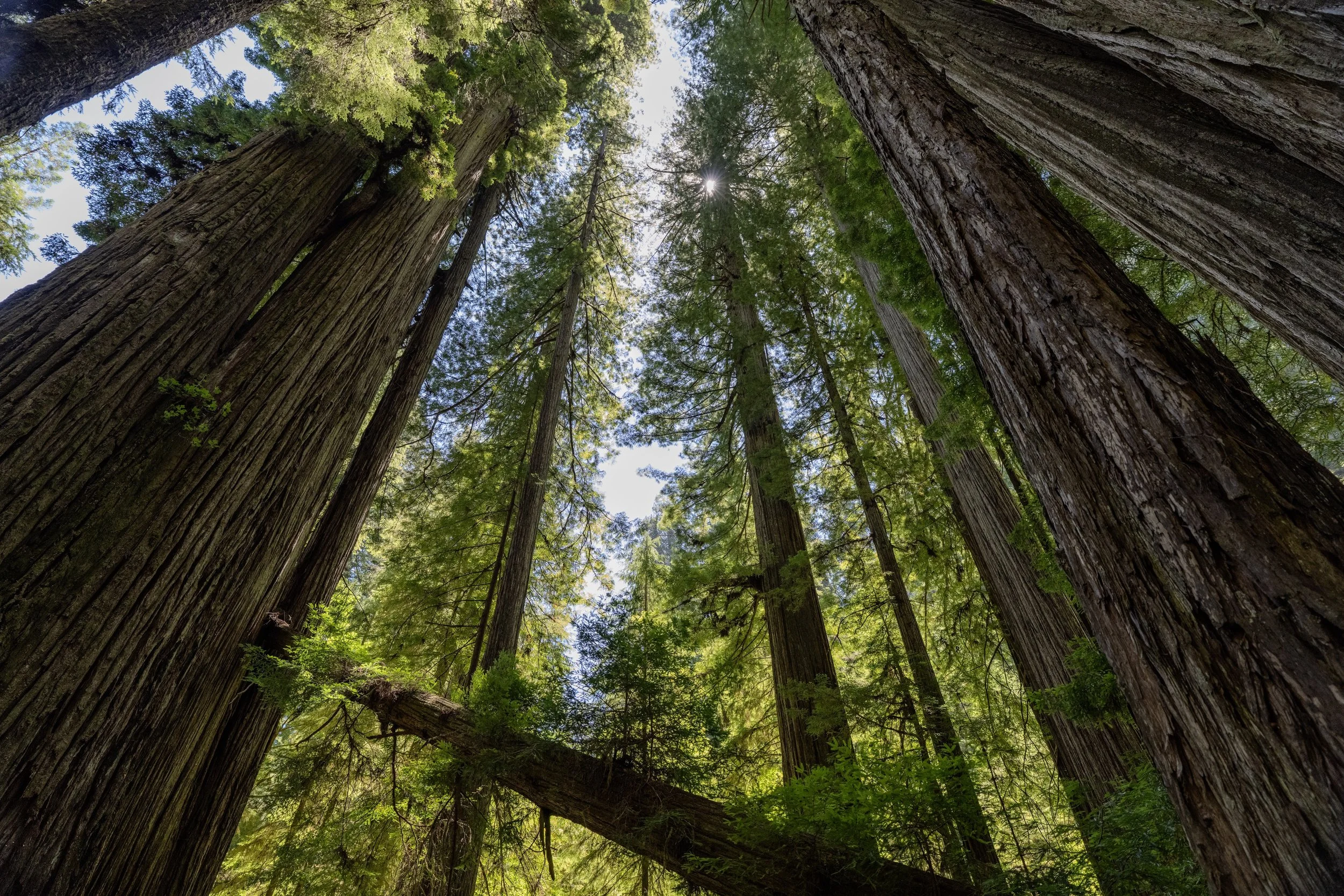
Everyone who visits this park takes a photo looking skyward, but it’s easy to see why
Of course, this illusion does not dissipate once you begin to tread the trails yourself. The thick and tall canopies created by the Redwoods have a tendency of creating searing streams and sparkles of light, which dance across the shaded forest floor. This visual feast is only challenged by the olfactory one that Redwoods quietly emit from their bark. I don’t quite have the vocabulary to describe the earthy, musty, and woody scent that permeates the park, but it is positively intoxicating.
Interestingly, if you wander far enough from the various hikers and campers enjoying the environment, much of the park can feel almost eerily quiet, as gusts of wind are limited and wildlife are reluctant to interrupt the quiet. We found it quite peaceful, though, and ultimately took few moments during our hikes where we simply sat in the silence and let the environment wash over us.
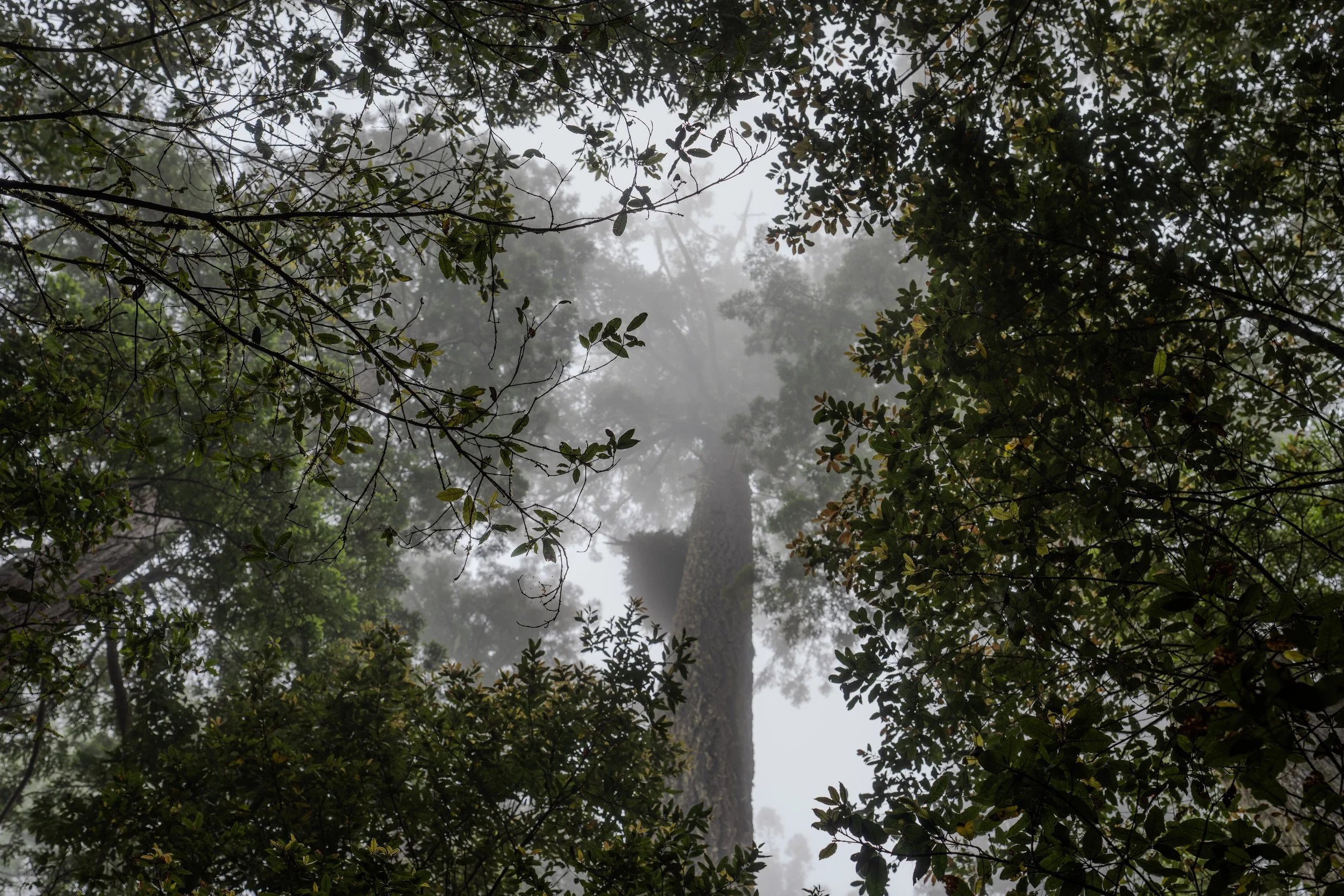
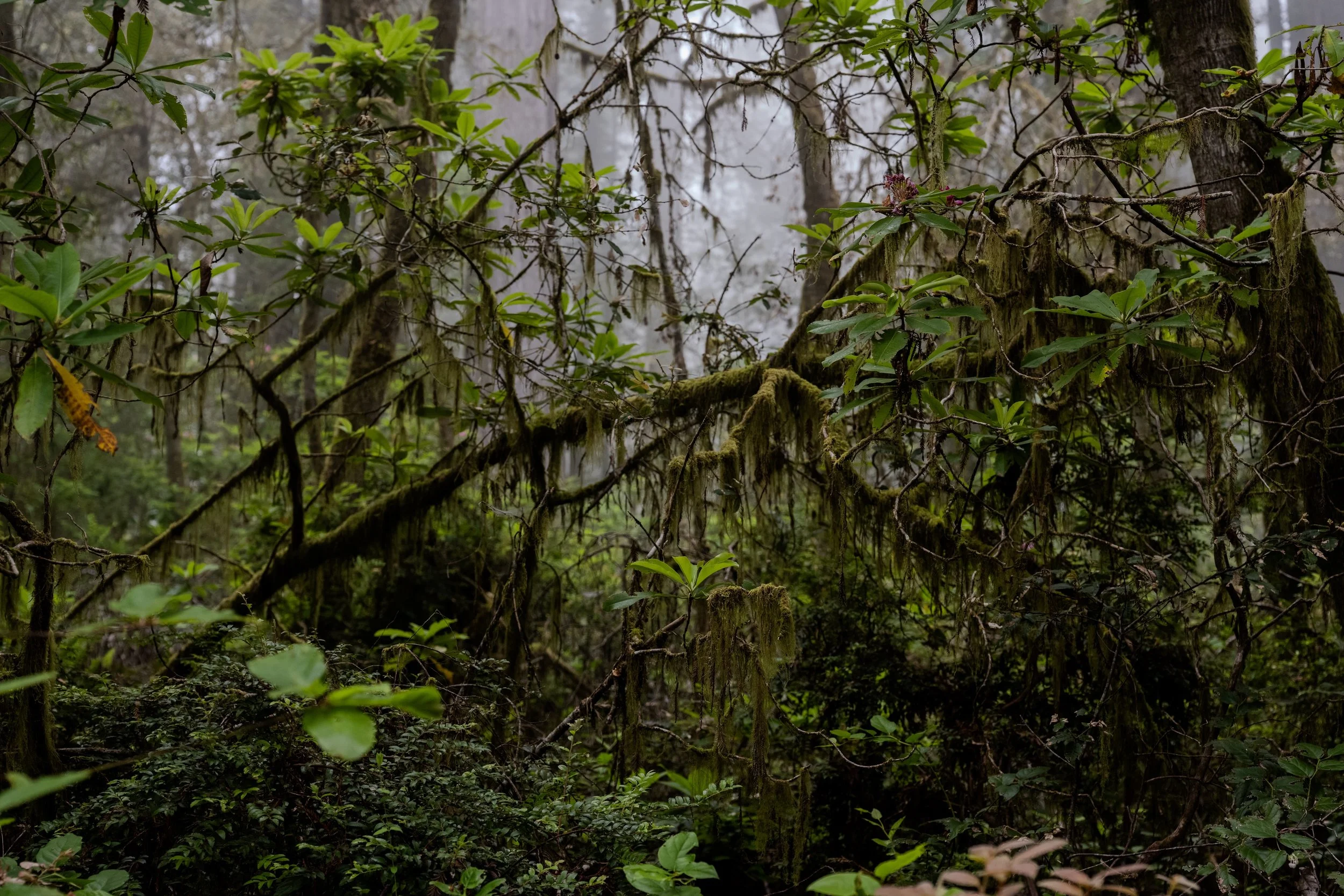
If you’re proactive enough to take an early morning hike, you may also encounter the trees under an additional canopy of fog, which further amplifies their mystique. I took these photos on a walk through Lady Bird Johnson Grove Trail, which follows a unique winding loop that navigates both new- and old-growth Redwood forests. The reduced visibility further amplifies the labyrinth-like nature of the trails, and is pleasingly reminiscent of fantastic forests in worlds like Endor or Rivendell.
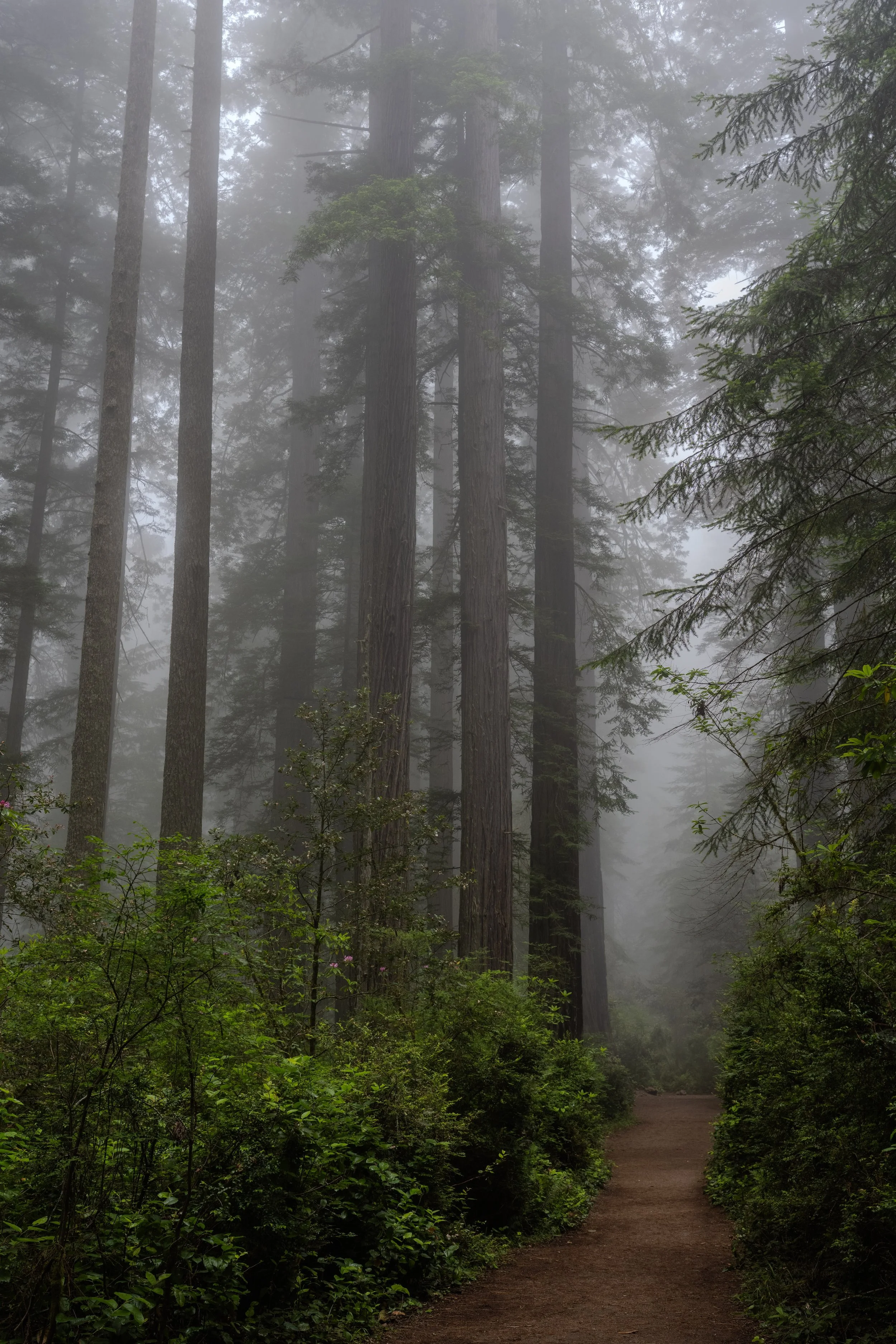
Aren’t you eager to see what lies ahead?
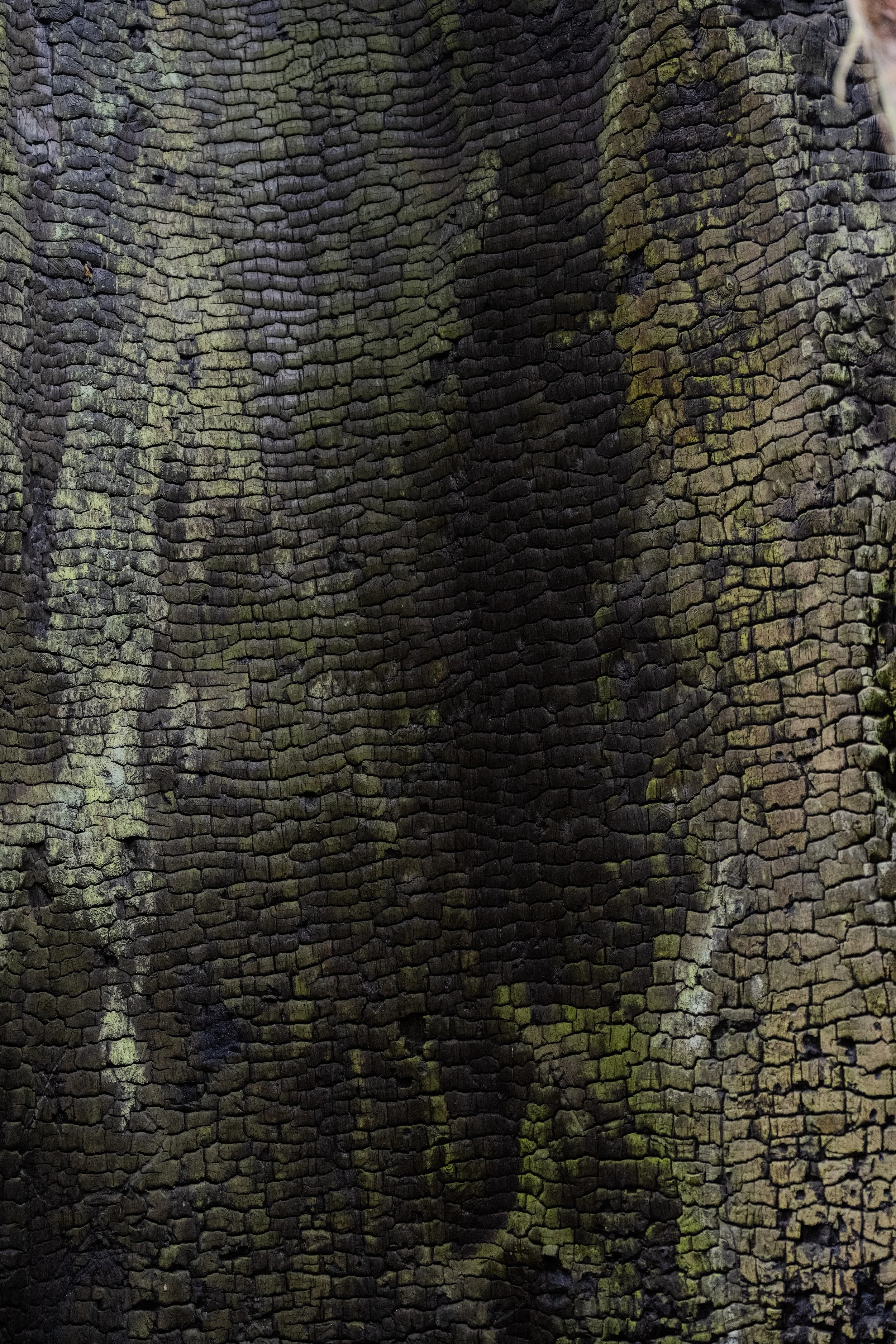
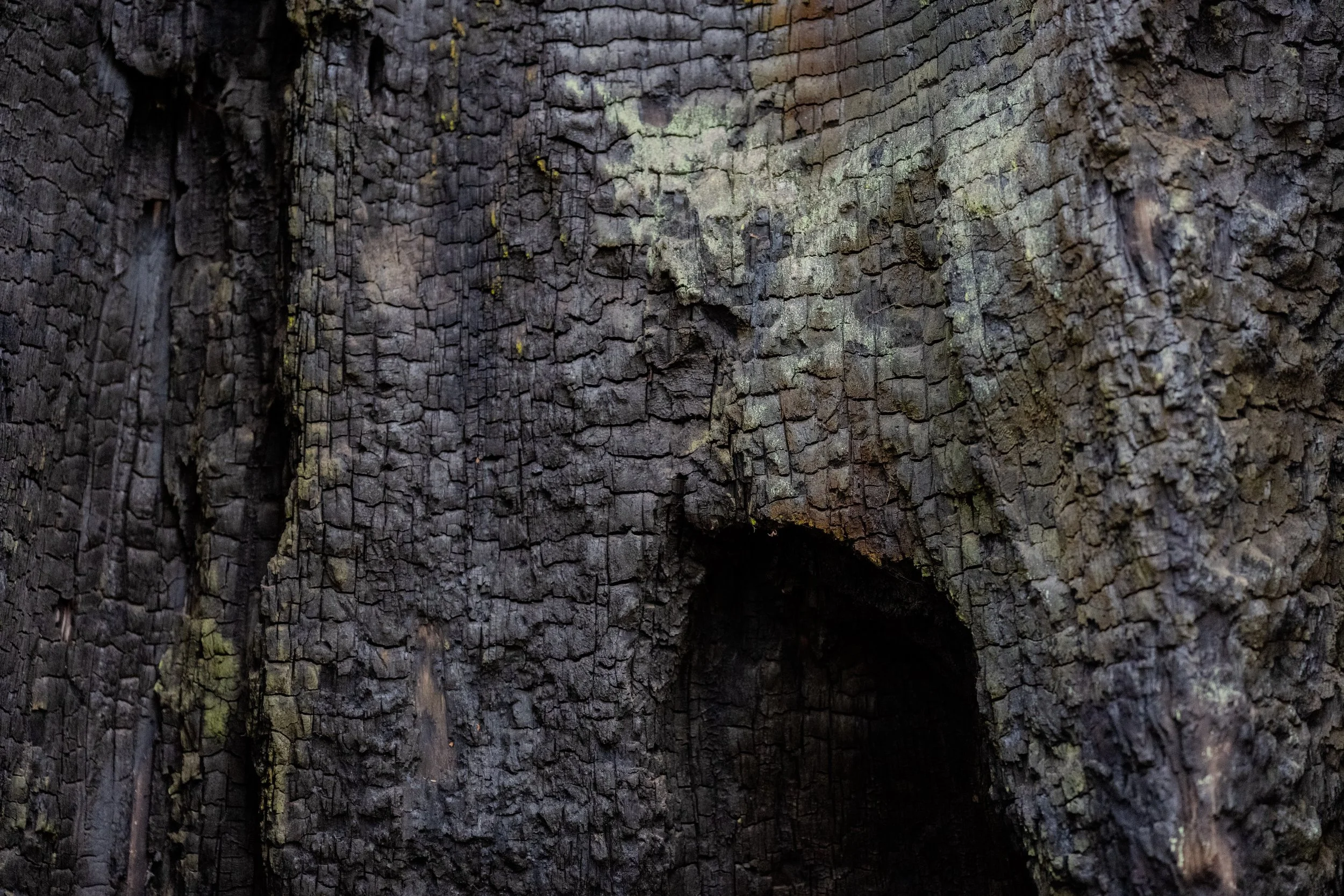
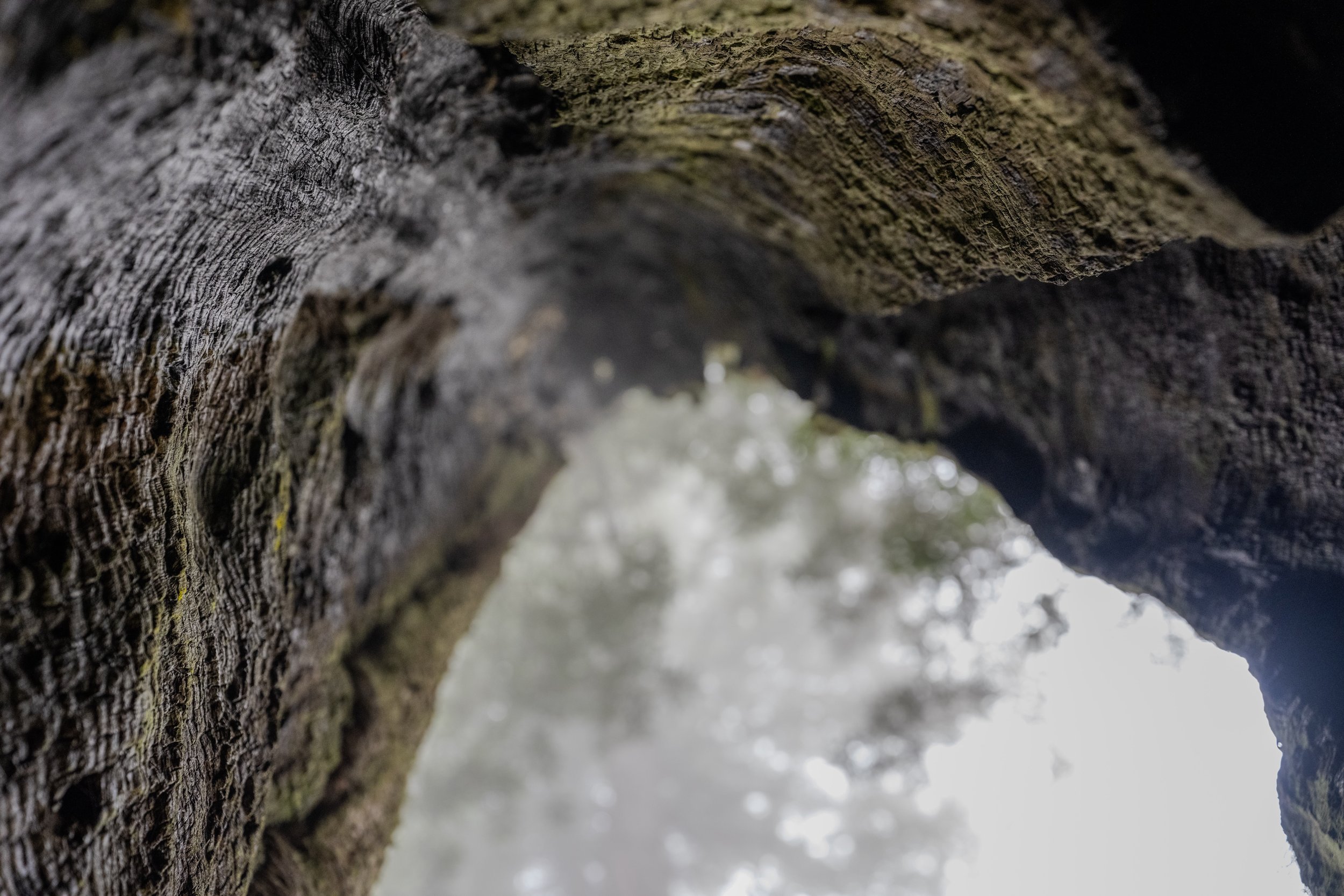
Finally, among from the grandeur of the trees, you might stumble upon some that have endured their share of wildfires, and have the scar tissue to prove it. Particularly for older redwoods, this can yield incredible patterns of carbonized bark and heartwood, that have since gathered layers of dirt and moss as the tree has nevertheless continued to grow and age. The timescales at play, coupled with the resilience of the trees to the cycles of their natural environment, is really remarkable, and was something I sat with a lot in those moments of silent contemplation.